"I don't fight the wood for a shape — I find the one it's already hiding." ·
Ruzo
Logic
Original Fine Art Catalog
Available Artwork
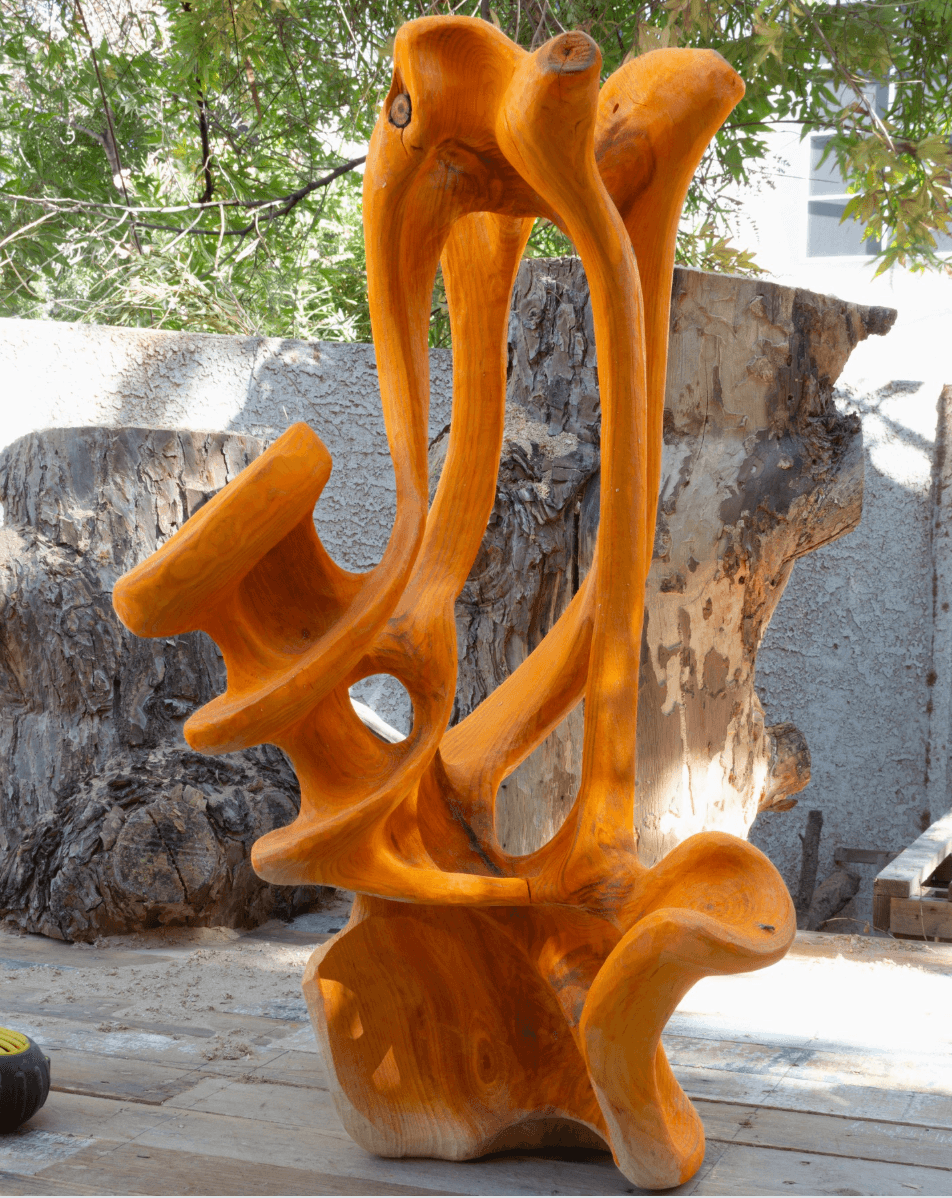
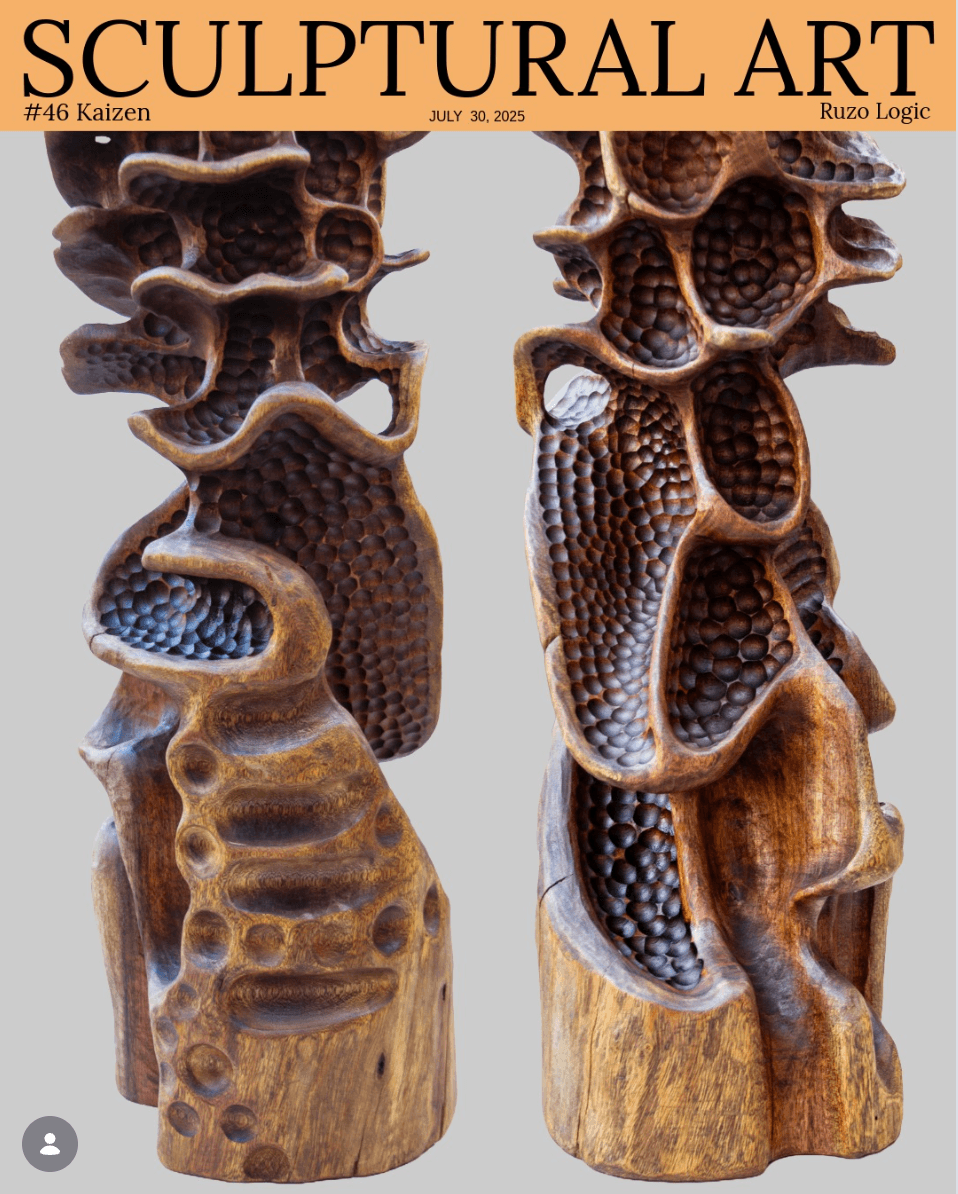
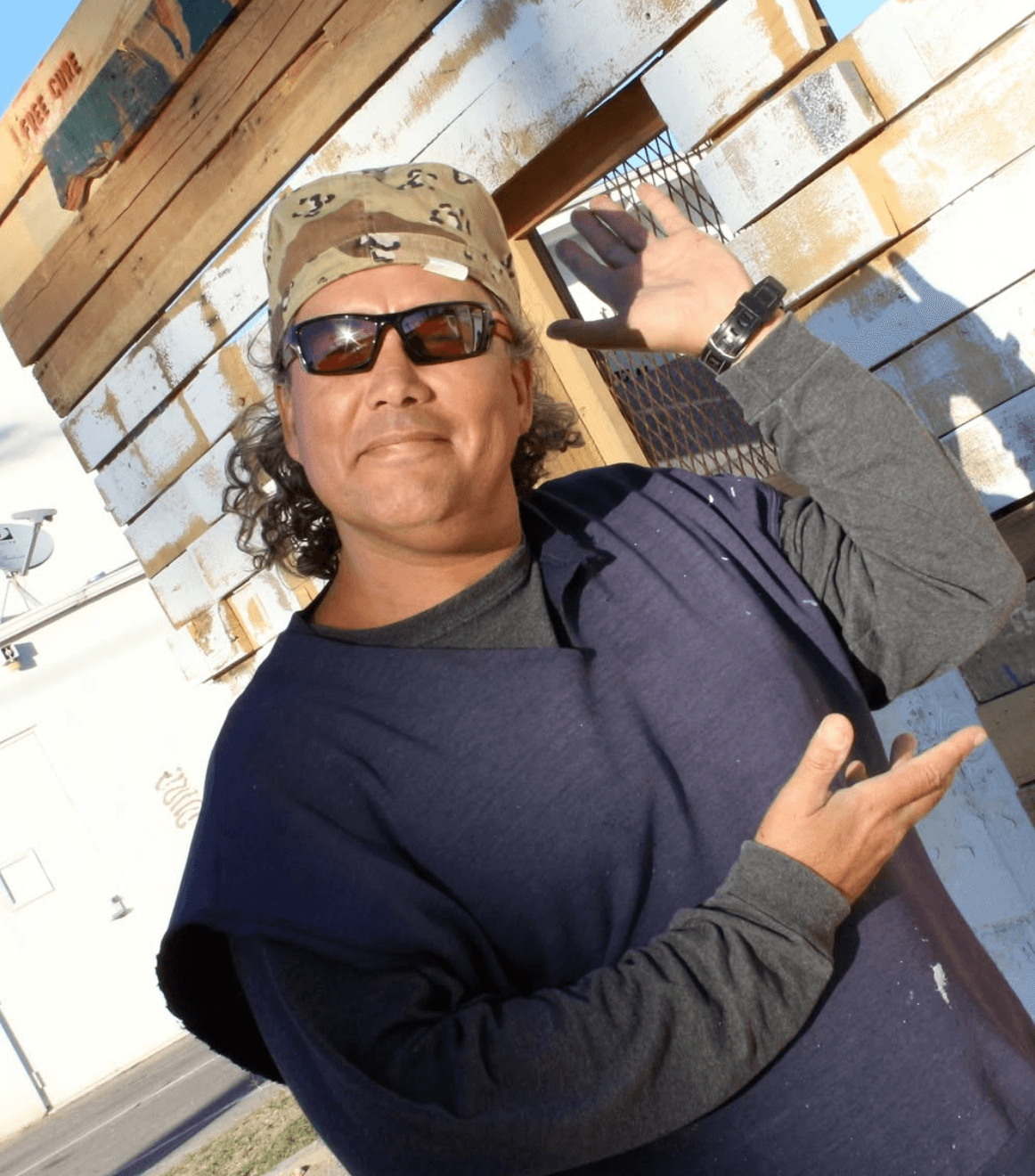
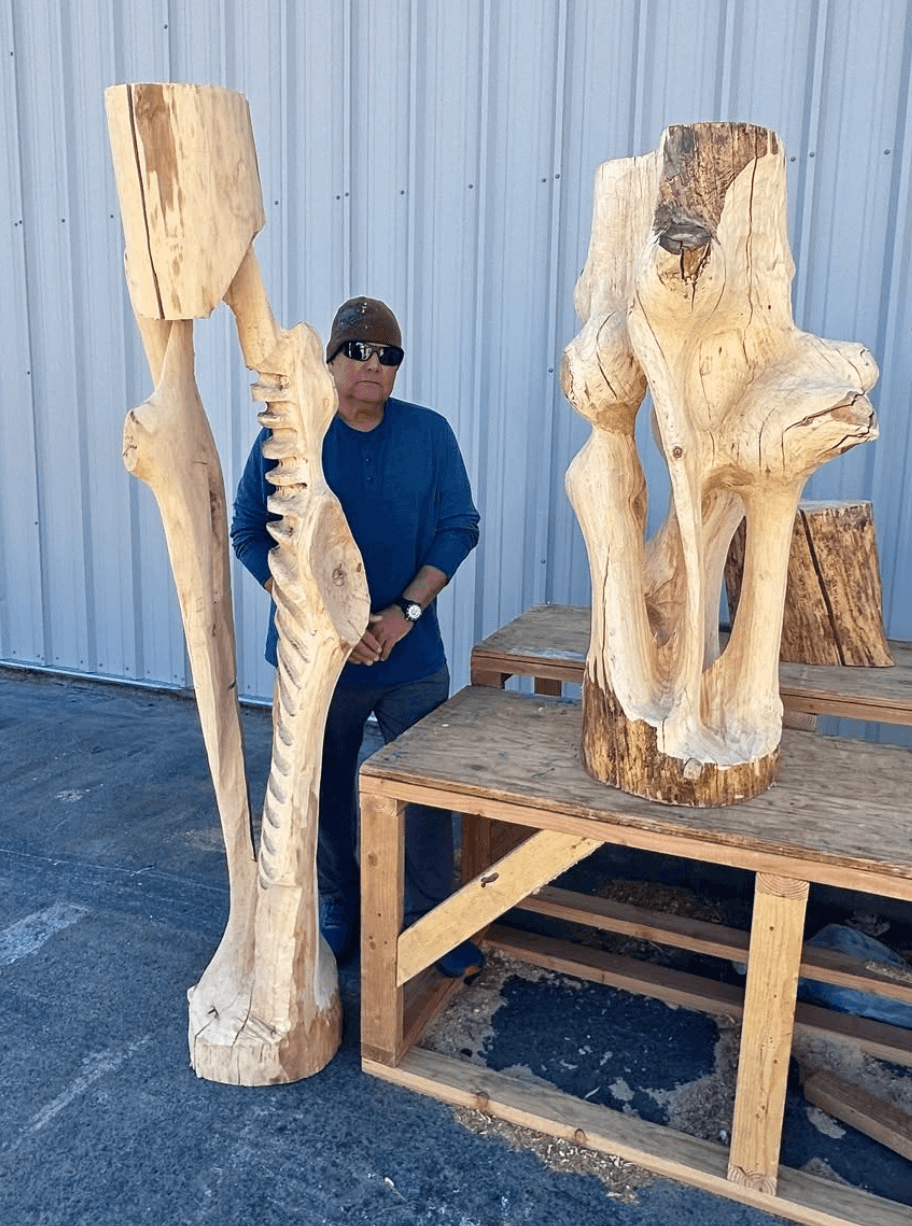
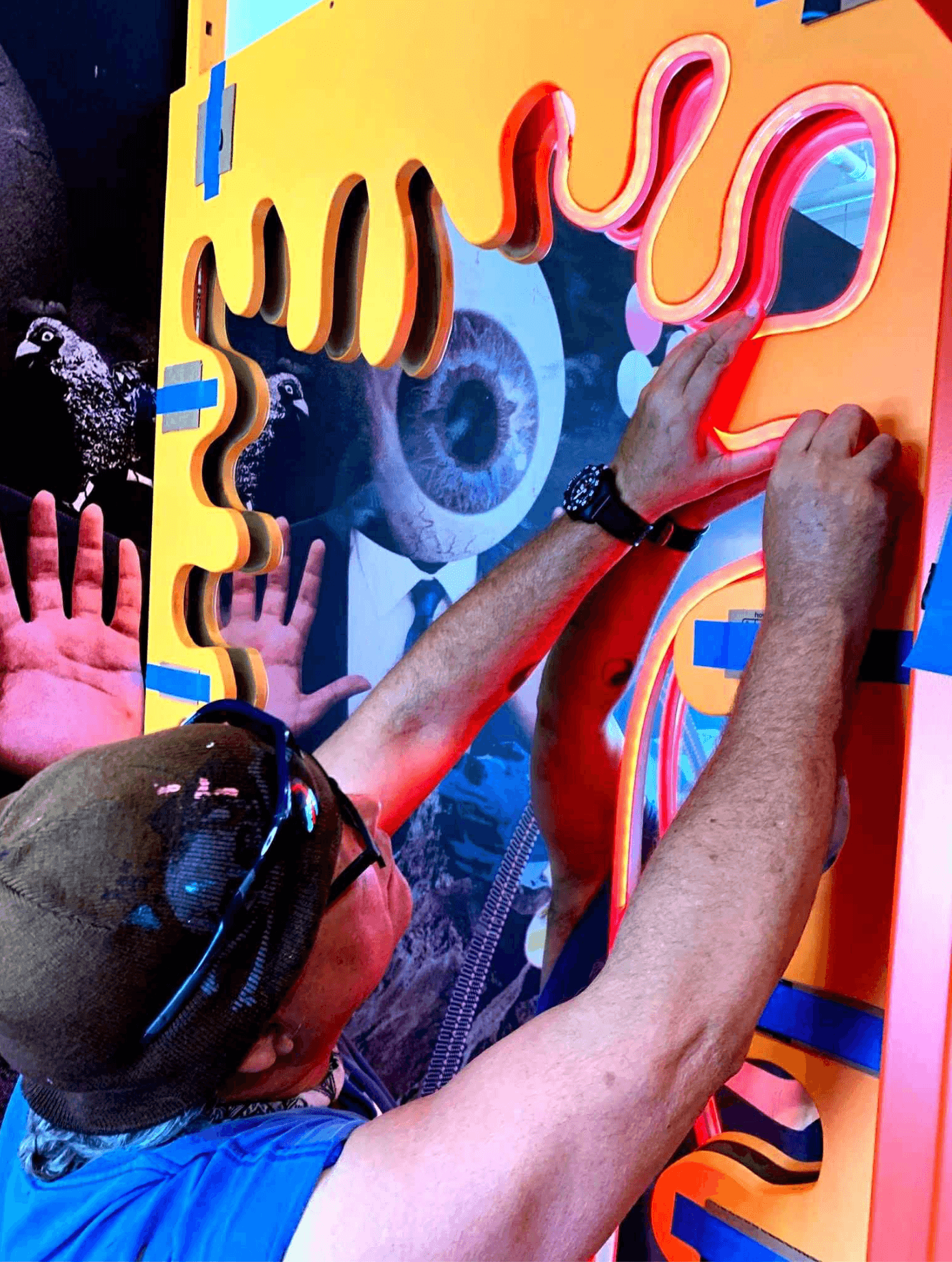
“For nearly two decades, Ruzo Logic built things for other people's visions — casinos, attractions, live public paintings that whole crowds could add a brushstroke to. Since 2023, his own hands have turned toward something rawer: reclaimed logs and salvaged lumber, carved and pieced into abstract, bone-like forms that look like they grew that way. His work still shows up where the public can find it — Las Vegas art markets, community festivals, the arts district he helped build — but now the material talks back before he does.”
— Ruzo Logic
The Process
Inside the Studio
The Painting Process
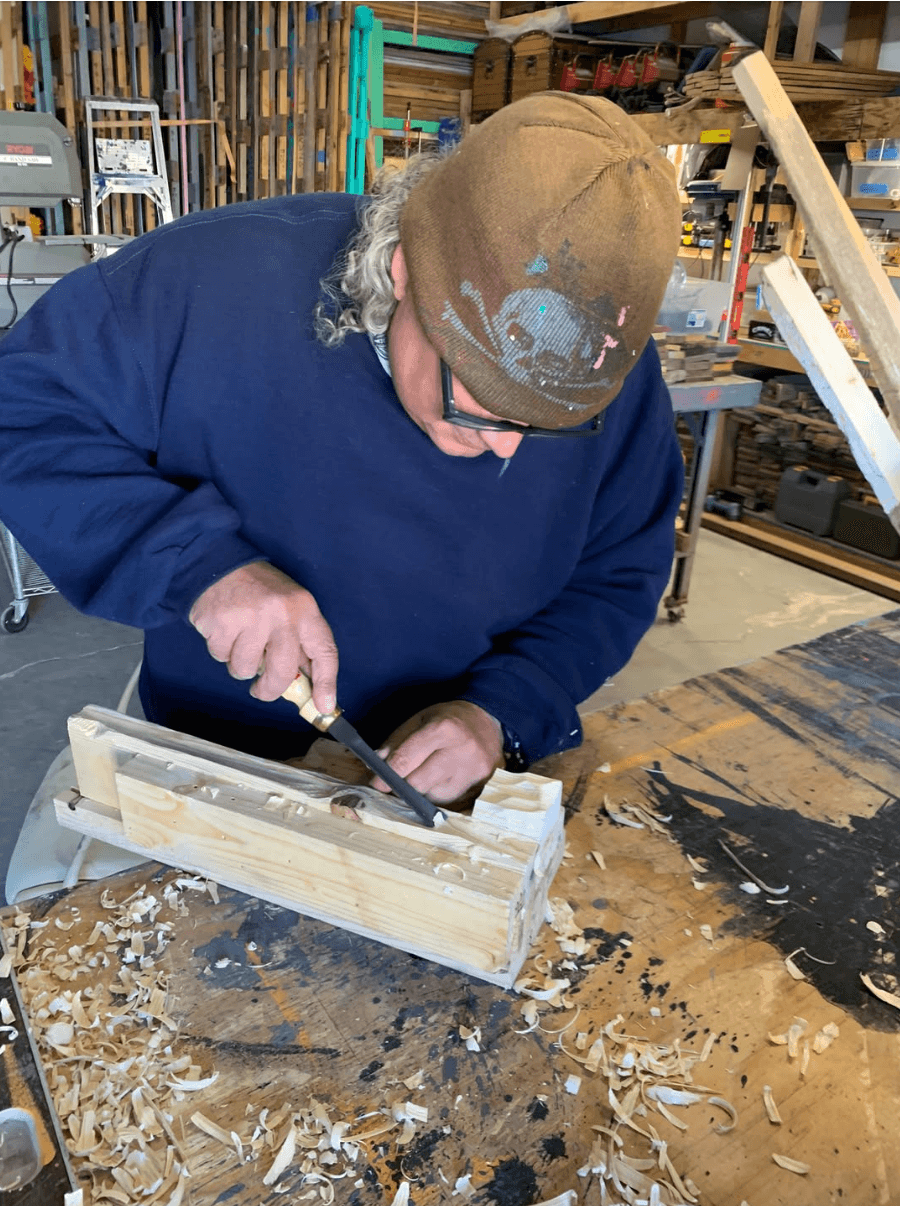
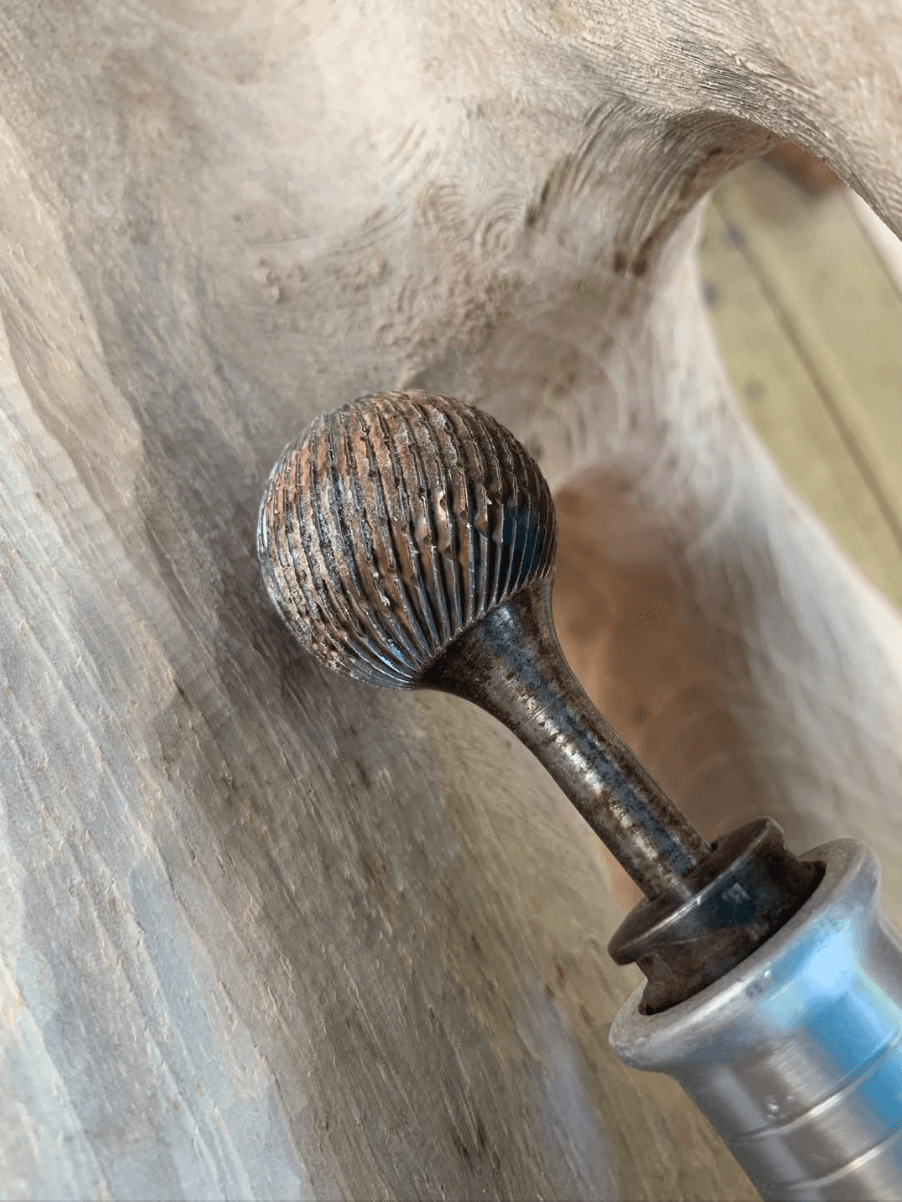
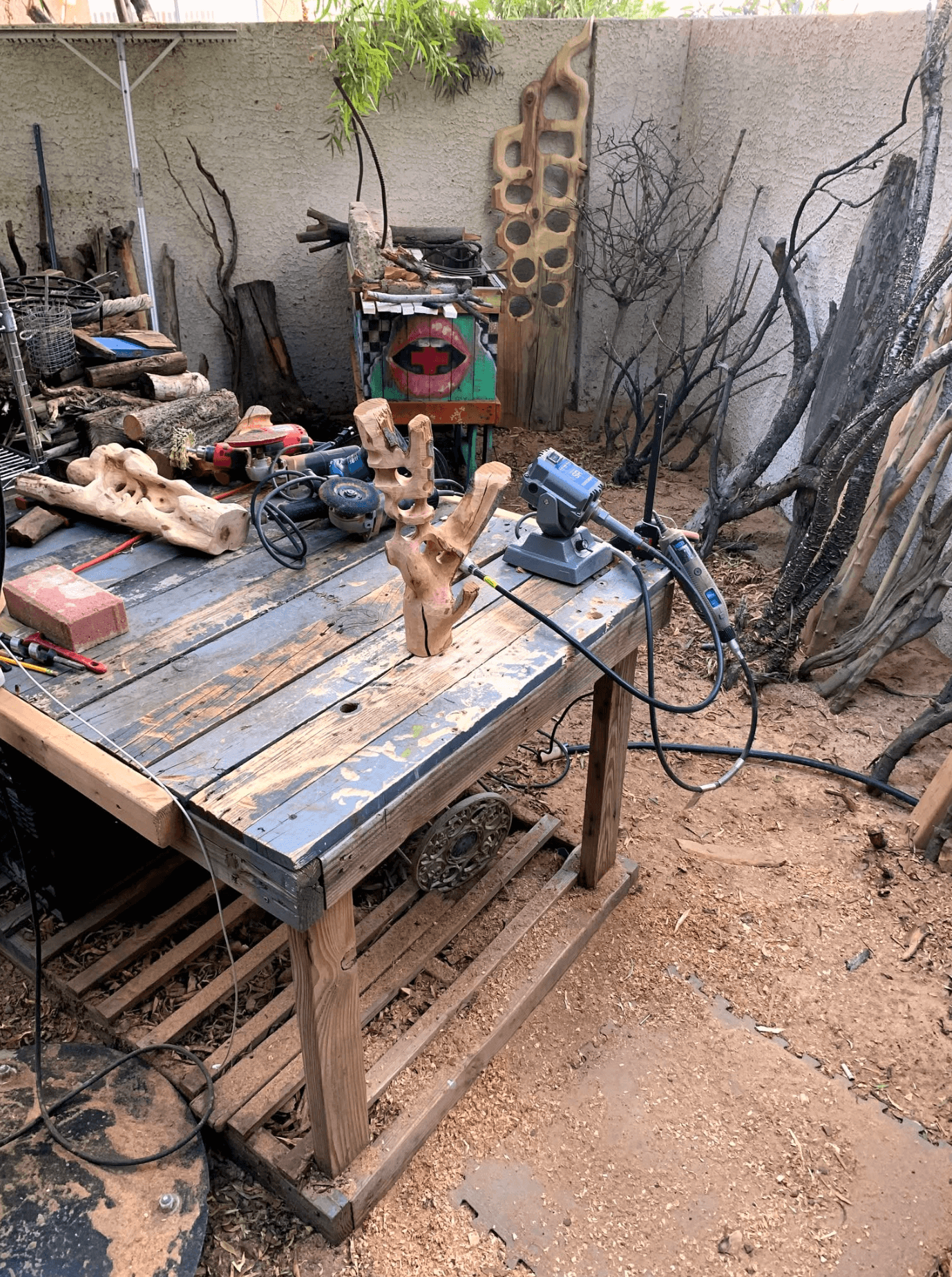
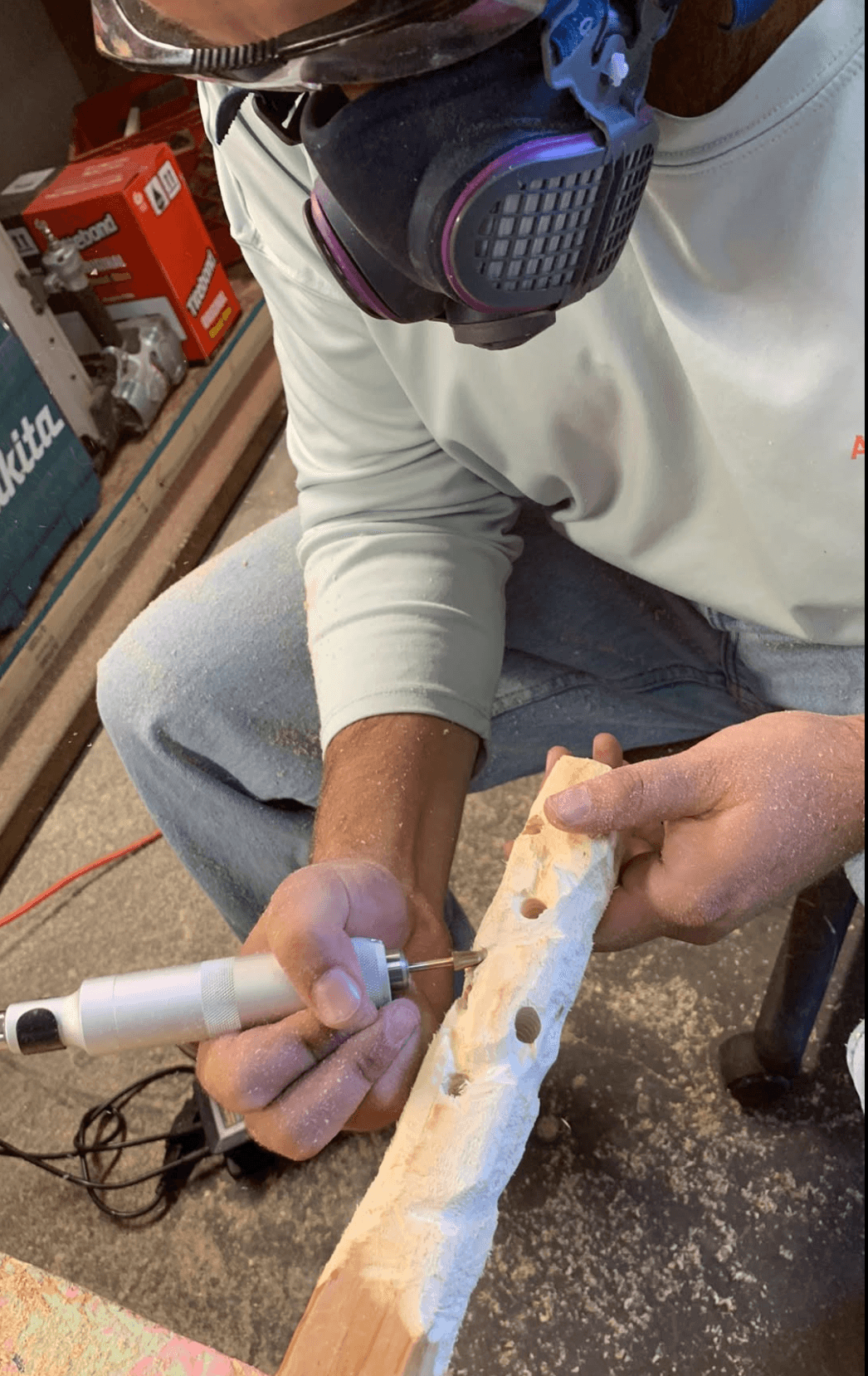
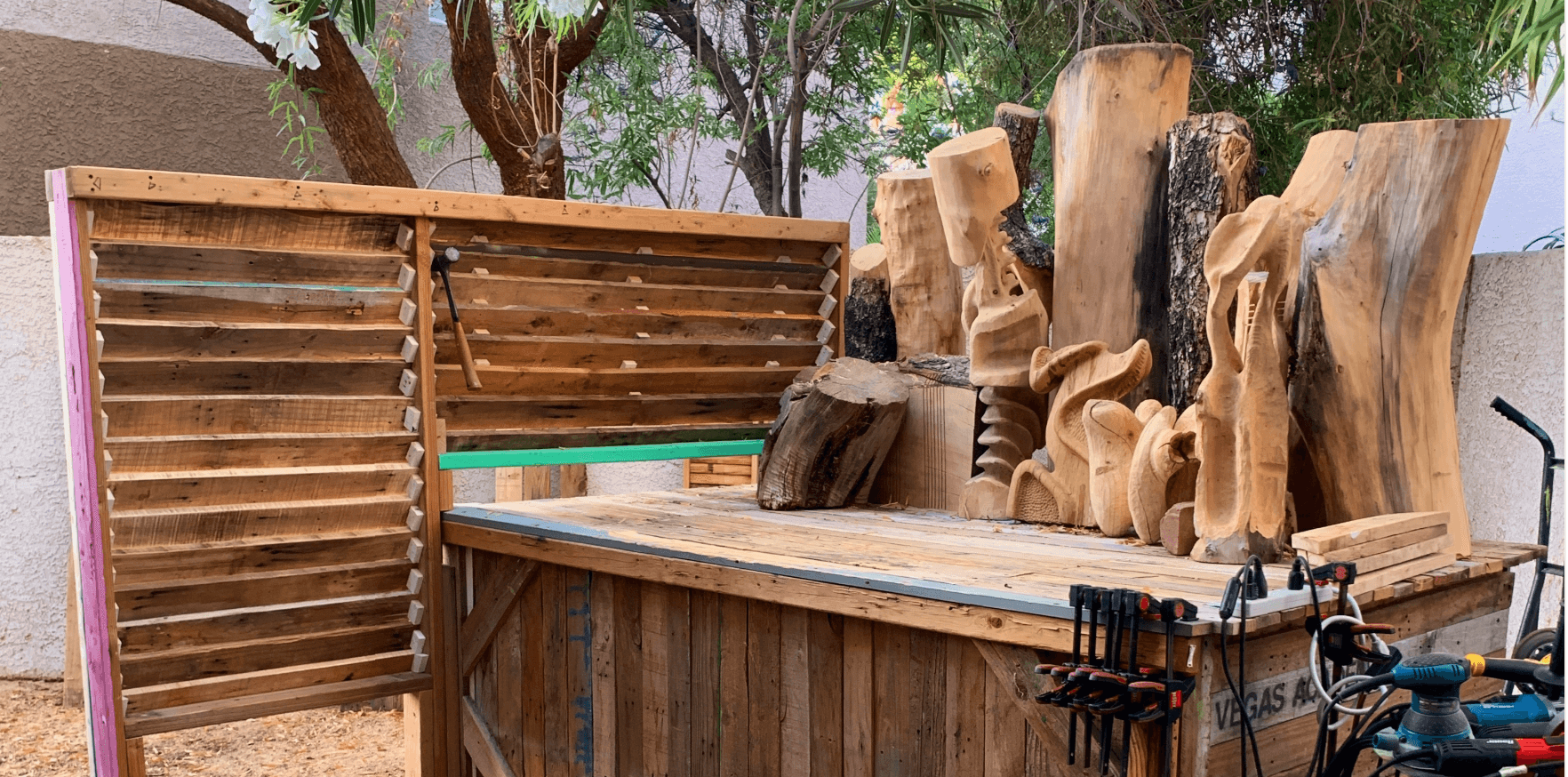
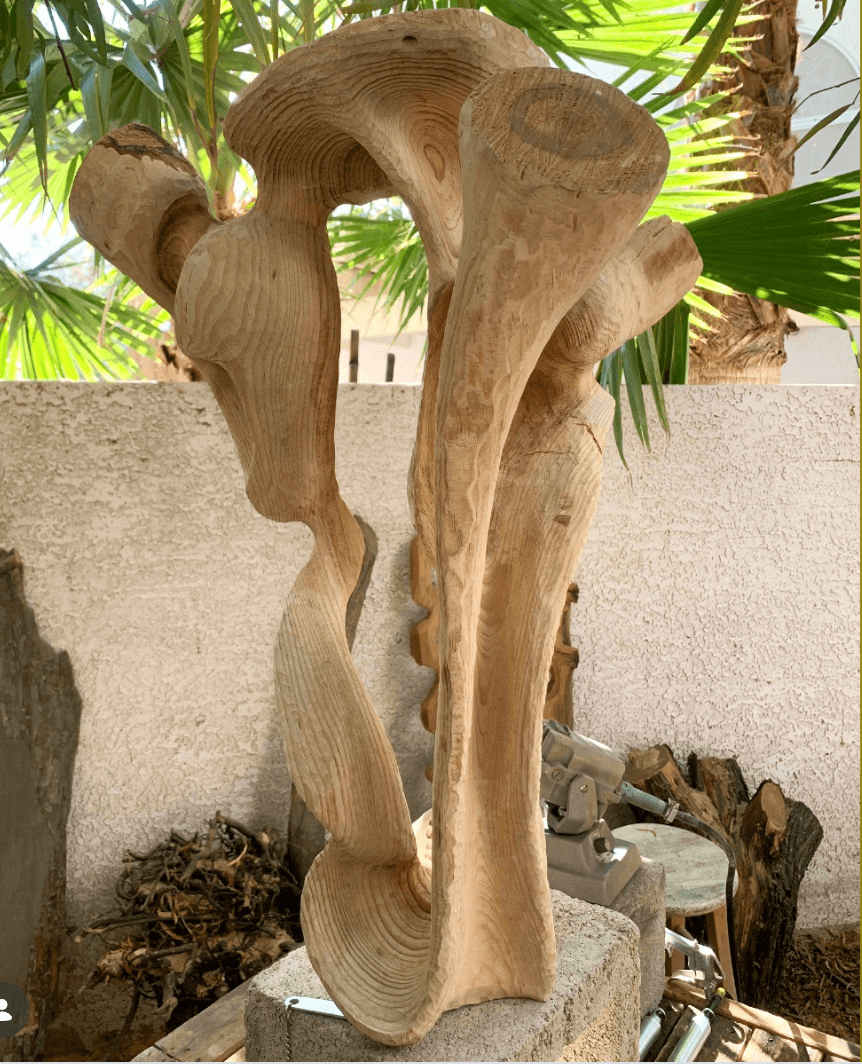
From Raw Log to Finished Form Ruzo Logic's studio isn't one fixed room — it's a working yard, part covered shop and part open-air lot, stacked with full tree trunks, salvaged lumber, and reclaimed pallet wood waiting for their next life. Hand tools share bench space with angle grinders, rotary carving tools, and a small library of chisels and mallets — the same instinct for sourcing, building, and problem-solving he carried over from years as a design fabricator. A piece usually starts with the log itself. Rather than sketching a final form and forcing the wood to match it, he works with what's already there — a curve in the grain, a knot, a hollow — roughing out the shape before switching to hand chisels and rotary tools for the fine detail: smoothing a joint, hollowing an opening, texturing a surface until it reads as bone, spine, or something else entirely that doesn't have a name yet. It's slow, physical work, often done outdoors in the Las Vegas heat, piece by piece, over weeks. A second, very different practice runs in parallel: taking hundreds of small, hand-cut blocks of reclaimed wood and building them up, one at a time, into mosaic-clad figures — the opposite instinct from carving, addition instead of subtraction, but rooted in the same patience. Whichever direction a piece takes, it eventually makes its way out of the workshop and into public view — at Las Vegas art markets, festival booths, and community events, the same spaces he's spent over a decade helping build for other artists.